
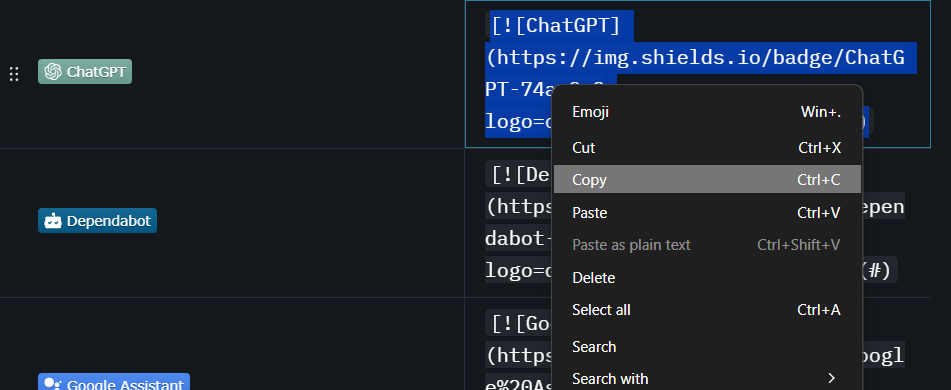
 Step 2: Pasting the Markdow into your file.
#### 💡 Use 'Ctrl + F' or the Table Of Contents to search quickly for your badge. 💡
# 🤔 FAQ ### Q: Why won't my badge lead anywhere?
View Answer:
By default, (mostly) all badges have (#) at the end of their code to define a link. **You need to replace the (#) with a link that you'd like the badge to go to when clicked on.** For example, if the code is: `[](#)` ...you'll need to replace the (#) with a link (eg. https://github.com/inttter). If the code is a dynamically updating badge such as this one: `[](https://github.com/badges/shields/releases)` You must replace 'saadeghi' with your GitHub username/organization, and 'daisyUI' with your repository name. This includes the redirect URL aswell.
View Answer:
Yes, please refer to the [Styles](STYLES.md) and [Customization](CUSTOMISING.md) documentations for how to style and customize your badges.
View Answer:
As long as they support Markdown rendering, you can. If you need more info, consult the help page for your platform.
View Answer:
**No**, you can also use them in HTML, by using `` tags to link to a website, and `
 ```
Result:
```
Result: